Showing posts with label music. Show all posts

Thursday, December 31, 2015

Adventures of a Cultural Omnivore: 2015


Each December, I try to put up a post on the best media I encountered throughout the year. This year, my omnivorous appetite for culture concentrated on music more than anything, but I did all right in other categories as well.

 
Books

I didn’t neglect fantasy (George R.R. Martin's A Song of Ice and Fire) or science fiction (Warhammer 40K), but as usual, the classics made the biggest impression. Joseph Conrad’s portrayal of the British Empire in Heart of Darkness connected in my mind with W.E.B. Du Bois’s comments on colonialism and racism in “The Souls of White Folk,” and I almost got around to a whole series of posts on it (previous post). Honorable mentions would include Franz Kafka’s The Trial, for its absurdist take on the workings of bureaucracy, and Hemingway’s Men Without Women. Every time I read Hemingway, I wonder why, if he had such an impact on English style, more authors don’t write like he did.

 
Comics

I would recommend He-Man and the Masters of the Universe from DC Comics to anyone who enjoys fantasy, and I would highly recommend Neil Gaiman and Mark Buckingham’s run on Miracleman from the Nineties, now being brought to digital format by Marvel. However, nothing could top Ms. Marvel this year.

Kamala Khan is a Pakistani-American high school girl and a Muslim. After a weird gas gives her the ability to stretch her body, she starts fighting Jersey City’s bad guys and, completely without permission, adopts the name Ms. Marvel, which once belonged to her idol Carol Danvers, currently known as Captain Marvel. For her costume, she redesigns a burkini.
 
 
Kamala gained a lot of press as DC’s first Muslim character with her own title, and her cultural and ethnic background is important, but she’s also just a high school girl running the teenage gauntlet and trying to figure out who she wants to be--and it isn’t anybody but herself. She doesn’t have her parents’ roots in Pakistani culture, she isn’t as religious as her brother, and she isn’t like the other kids at her typical American school either. She has squabbles with peers and falls in and out of love and is painfully self-conscious and unsure of herself.

Literature is full of cookie-cutter caricatures along those lines, but writer G. Willow Wilson brings Kamala to life in ways that resonate across cultural and generational divides, and Adrian Alphona’s art is unique, effective, and frequently hilarious. Together, the two serve up everything from typical superhero exploits to tear-jerking drama--and at least one moment among the most powerful I’ve ever read.

Early in Volume 1, Kamala’s powers are fluctuating wildly and she suddenly finds she has transformed to look exactly like her hero Captain Marvel, a classic buxom blond beauty whom Kamala sees as perfect. But a mere 23 pages into the series, I had already come to understand and care about Kamala so strongly that I only wanted her to be who she is--a short, sometimes clumsy brown-skinned girl with unruly black hair. That’s part of her beauty, and watching her turn white felt wrong, wrong, wrong.
 
 
I was so impressed by Kamala Khan, and have been so unimpressed with most of the 2016 presidential candidates, that I even whipped up a couple memes featuring her. Nothing mind-blowing, but feel free to share:

 
I love it when she embiggens her fists:


Movies

Early in the year, I continued a stretch of films from director Jean-Luc Godard. Then after my son started leaving the house each day for kindergarten, I was actually able to hit the movie theater every now and then! Spectre and Star Wars: The Force Awakens were both excellent, but it was Mad Max: Fury Road that inspired me most. The result was a series of blog posts examining the movie from the perspectives of feminism, Christian myth, and Marxism:

     Jennifer Blood Feminista
     Mad Max: Of Hawks and Doves
     Mad Max: Out of Eden
     Mad Marx: Frederick Road
 

Television

I also found the time--I have no idea how--to watch more TV this year. Penny Dreadful and Outlander were entertaining, while Supergirl was just the fluff I was looking for. The show has problems, but Melissa Benoist isn’t one of them. She’s fairly wonderful, and watching her deal with her life as Kara Danvers is one of the highlights of the series. Meanwhile, Game of Thrones continues to engross and Syfy appears to have a quality space opera in The Expanse. However, Mad Men really was the best show on television, and the question needs to be asked: Has there ever been a better show on television?

 
Video Games

The only video game I played this year, aside from a little Relic Run (Tomb Raider) on my iPhone, was Silent Hill: Downpour. I felt like it was a return to form for home console games in the series, after Homecoming was so bad GameStop salespersons encouraged me not to buy it. I should have listened. Downpour doesn’t try to break or even bend the template for Silent Hill, it just tries to get it right and succeeds.

 
Music

This year, I learned that scores of bands I’ve never heard of are pumping out some incredible metal: Barren Earth, Khemmis, My Dying Bride, Tribulation, Krisiun, Avatarium, Sylosis, Sulphur Aeon. However, the bands that really struck a chord with me this year lay in a completely different direction. One was Siouxsie and the Banshees. I can’t believe I didn’t discover them earlier. They belong in the company of alternative music greats like U2, R.E.M. and The Cure, and you may put “Night Shift” on my list of coolest songs ever:

 
Then one morning I put on some Jefferson Airplane and Grace Slick’s voice in “Somebody to Love” electrified me. Of course I’d heard the song countless times, but this time I really heard it. Now Jefferson Airplane is an obsession. I’m still just wading in, but the water promises to get deep as I explore more of their music and the movement out of San Francisco that they were a part of:

 
And there you have my favorites from 2015. Let me know yours. This cultural omnivore is always looking for something else to eat.

 
Related posts:
Twilight of the Cultural Omnivores
Best in Comics 2014
Best in Music 2014
Best of Books 2014
Best in Movies, Video Games, Comics 2013
Best in Music 2013
Best in Books 2013

Friday, February 20, 2015

Listening to Vinyl: Dust in the Grooves


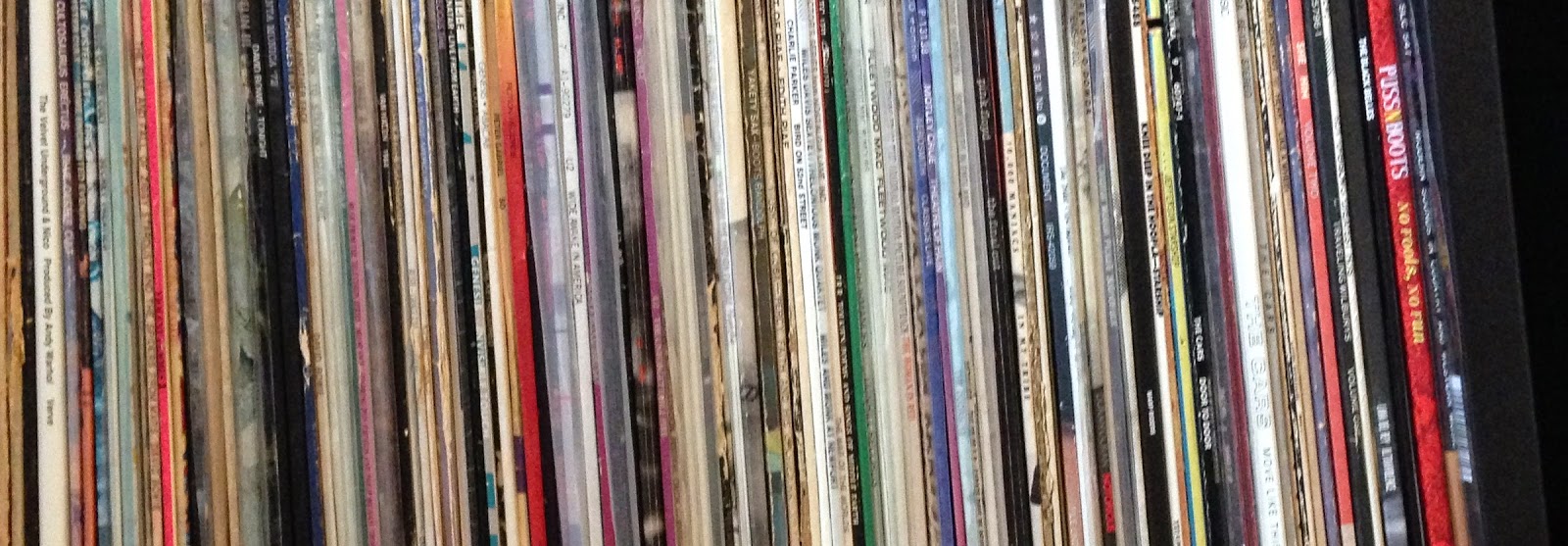
I used to think music fans who insisted on the superiority of vinyl records over compact discs were just pretentious. Surely, I thought, digital recording methods are better. That changed, however, when my wife bought me a simple Sony record player a few Christmases back and I gave vinyl another try.

One of the benefits was quickly amassing a decent record collection because unless you’re into collector’s items, used LPs sell for cheap. I bought quite a few rock records at Vinyl Solution Records in San Mateo, California for about $5 apiece, and my classical music collection went from zero to 33 1/3 in no time flat as I picked up armloads as cheap as five for a dollar. A hardbound, six-disc pressing of Wagner’s Gotterdammerung with illustrated libretto for $9.99? I couldn’t be happier.

I scavenged some albums out of the clearance bins at Rasputin Music in downtown San Francisco just for the artwork, like Astra by Asia. The illustration by English artist Roger Dean is evocative of every sci-fi dream I’ve ever had and surely looks better on a 12×12 cardboard sleeve than it would on a CD insert:

 
The sleeve is often the highlight of the packaging, but many LPs have foldouts, posters, 12” booklets, and so forth. My copy of Emerson, Lake & Palmer’s Brain Salad Surgery is sorely worn, but that only heightens the effect of H.R. Geiger’s biomechanical art known for its hidden phallus.


The packaging of many old classical records is nothing more than a cardboard sleeve, but some deluxe editions have a sturdy elegance unmatched by any subsequent formats. One of the jewels of my collection is Tchaikovsky’s Swan Lake. The front opens like a book and inside is a lengthy commentary accompanied by photographs and illustrations stretching back to the ballet’s 19th-Century origins.


Old classical album text is a joy to read for its oddly quaint and frequently curious language. The sleeve for Sergei Rachmaninoff Plays Concert III, for example, describes Rachmaninoff as “a triple-threat”--I guess because he was a composer, conductor and pianist--and goes on to brag about now decades-outdated technology:

“That elusive, yet very real joie-de-vivre is amply demonstrated on this recording, as Sergei Rachmaninoff brings us all-time piano masterpieces in a flawless, noise-free stereo recital made possible by Klavier’s unique process of re-creating great performances of the past using high-fidelity tools and techniques of the present and the future.”

As with the Rachmaninoff album mentioned above, there is something magical to hearing history’s biggest stars of the classical world perform on a recording printed in their own day: Ruggiero Ricci playing Paganini on a Stradivarius, Arturo Toscanini conducting Helen Traubel before an audience many of whose members have since passed away, Maria Callas performing Medea at La Scala when she was still upsetting the opera world, igniting scandals, and recasting the diva mold in her own image. The sounds themselves are a record of the past, and so is the medium.

They’ve been saying since the Nineties that vinyl is making a comeback, and I finally believe it. Most new music today comes out in an LP format, often with a free digital download. Colored vinyl and picture discs are nothing new, but it’s good to see that record manufacturers haven’t abandoned such collector’s items in a time when physical releases are an afterthought to the official digital release or the unofficial leak. My copy of Death’s The Sound of Perseverance (from Amoeba Music in San Francisco’s famed Haight-Ashbury district) is translucent with blood-like flecks. And recently, I ran across a Record Store Day-only 10” picture disc single of Rush’s “The Garden” (Recofan in Shibuya, Tokyo):


No one, however, has taken their dedication to vinyl further than Jack White. Last year, Lazaretto broke a 20-year-old record for vinyl sales in an album’s first week of release. White and his record company Third Man Records designed an “Ultra LP” that plays on three speeds, has hidden tracks, plays from the center out on one side, and even projects a holographic angel over the label. He could barely contain himself when he described it to Conan O’Brien.

But does vinyl really sound better? When it comes to clear, dynamic sound, the best I can ascertain after some poking around the internet is that it depends on a number of factors and there’s a lot of disagreement. Some music is overly compressed today, which can leave it sounding shallow and tinny compared to the roomy and rich sound regularly enjoyed last century. There are, however, pitfalls with vinyl as well, so . . . it’s complicated. Jack White’s Ultra LP boasts no compression, so perhaps he has found the perfect way to record music.


Vinylophiles have also long claimed that LPs sound better because of their grainy sound. I used to view this as mere audiophilic Ludditism, but there’s something to it. I find dust in the grooves to be an impediment to enjoying classical music, but it’s perfect for a lot of classic rock: The Doors, Fleetwood Mac, Blue Oyster Cult, Joan Jett . . .  Ultimately, it’s ineffable, but the experience doesn’t lie.

Another aspect of vinyl that’s difficult to describe is the pleasure derived from the listening process. I can locate, purchase, download and start listening to something on iTunes in the time it takes to remove an album from the sleeve and lay it on the turntable. Then you have to wait for the machinery to move the needle into place--unless you’re maneuvering it by hand. And then, of course, you have to switch sides several songs later. It’s slow and clunky--and certainly not ideal for concept albums best experienced as a whole, like Pink Floyd’s Dark Side of the Moon--but the physical involvement and the decreased speed enhances enjoyment. You have to stop . . . stop and attend to the music.

It’s strange to think that a medium stretching back to the 19th Century and repeatedly challenged by smaller and in some ways better formats would experience a resurgence in the 21st Century, but that appears to be what is happening. Vinyl records will never be the dominant medium again, but many like me are discovering that the newest technology is not always the most satisfying.


Friday, December 19, 2014

The Best of 2014: Music


It was a good year for music. My listening ranged freely among genres from classic soul like Marvin Gaye’s Trouble Man to Swedish melodic death metal like Amon Amarth, but despite all the groovy or brutal music with hipster cred I could name as the best music I encountered in 2014, I have to go with “Let It Go” from Disney’s Frozen (2013).


As I understand it (I haven’t seen the full movie), Princess Elsa has the ability to create and control ice. This is a cause of embarrassment and conflict in the royal family, causing Elsa to flee the palace in an emotional fit and unleash her powers to cast an eternal winter over the land. She hides herself in the mountains and erects an ice fortress where she can live as a Snow Queen openly wielding her powers.

On the surface, the lyrics suggest a moment of self-empowerment. Elsa is declaring that she will no longer restrain herself for the comfort of others. And yet it is out of weakness--her inability to stay in her home kingdom--that she has fled to her mountain refuge, dragging all her emotional baggage with her. She is overcompensating, boasting even as she breaks inside.

Altogether then, “Let It Go” is a powerful statement of the simultaneous experience of strength and fragility that is being human. I read somewhere that when the scriptwriters of Frozen heard “Let It Go,” they thought it was so wonderful that it was unsuitable for a typical villain, so they reworked Elsa’s character to be more sympathetic. The result is a charming musical number that children the world over are singing in the original English or their own languages.


My 3-year-old is no different. He makes ice castles with Legos, copies Elsa’s gestures, and belts out the song all . . . day . . . long. The lyrics “Let it gooooo!” are simple enough, but it’s comical to hear him sing such grown-up phrases as “The past is in the past” and “Distance makes everything seem small.” Some are a bit of a mouthful for him, like “spiraling in frozen fractals all around,” but he soldiers through. Then, when he finally stops, it isn’t over because I can hear kids a few doors down singing it!

A worldwide hit, a poignant statement of human nature, and an inspiration to children and adults alike: not much makes it to that level, so despite all the artsy, retro, indie or badass music I could pick as my personal best of 2014, I choose a showtune from an animated Disney film.


Friday, December 20, 2013

My Personal Best of 2013 in Music


Between my Major Life Activity, a two-year-old and everything else, my once small reserve of time for kicking back and relaxing has dwindled to the point where it’s as ephemeral as those stars you can see out of the corner of your eye but which disappear when you try to look straight at them. Nonetheless, sitting at my desk working long hours every day, I can still enjoy music--and here’s my personal best of 2013.

The hands-down best music I encountered this year was Lucius (new album), noted for its two lead female vocalists who often sing in unison. I’m reminded of when a band performed traditional Irish music at the Harbor Bar in Portrush, Ireland when I was at university. Sometimes, a female vocalist would join for a few songs and a reverential hush would settle over the bar. Lucius is like that. The group's best songs and recordings are a moment within which something intimate occurs, something carved out of all the surrounding clamor. A lot of fans came to Lucius through a Tiny Desk Concert for NPR (here), but I just can’t get “Two of Us on the Run” out of my head:


Perhaps the biggest force in my listening habits this year, however, was The Roots. It all started when I read drummer Questlove’s memoir Mo’ Meta Blues: The World According to Questlove. I kept notes as he mentioned his favorite albums from soul and R&B to rap and hip-hop, and then I began tracking down as many of them as I could, from Stevie Wonder’s Songs in the Key of Life to N.W.A.’s Straight Outta Compton to De La Soul classics like De La Soul Is Dead. And, of course, I devoured just about anything The Roots have touched: studio albums, live albums, collaborations, and even songs merely produced by the group or featuring its members as guests. Here’s an official video medley from the 2006 album Game Theory:


While I definitely prefer the late 80s/early 90s hip-hop style--the groups, social commentary, danceable beats and gritty production--my quest for the best in rap and hip-hop also led me to download more recent albums like NAS’s Life Is Good, Kanye West’s dark fantasy Yeezus, and, just last week, Busta Rhymes and Q-tip’s free mixtape The Abstract & The Dragon (here). These recent albums show that the genre ain’t what it used to be, but it can still be engaging.

In 2013, a lot of my favorite groups came out with new albums--AFI, Avenged Sevenfold and Linkin Park--but they all tended to be good rather than great. One artist who redeemed herself in my eyes, however, was M.I.A. Maya, her last official release, left me with the feeling she was rehashing old tricks instead of breathing new life into them, but this year I discovered the Vicki Leekx mixtape, and soon after, this year’s Matangi. Together, the two releases show that M.I.A. has the creativity to back up her swagger. Nothing sounds like her, and that isn’t an easy feat in today’s music industry.


All of that is a far cry from the usual heavy alternative and metal that usually moves me, but it wasn’t that kind of year. Go where Euterpe leads, and you can’t go wrong.